The Best Red Light Therapy Panel for Deep Tissue Recovery (5 Brands Compared)

Disclosure: This article was written in collaboration with RLT Home, who have published a companion piece recommending Neuronic on their site. We have a commercial relationship with them, so this isn’t an independent review. Specifications are each brand’s own published figures as of November 2026.
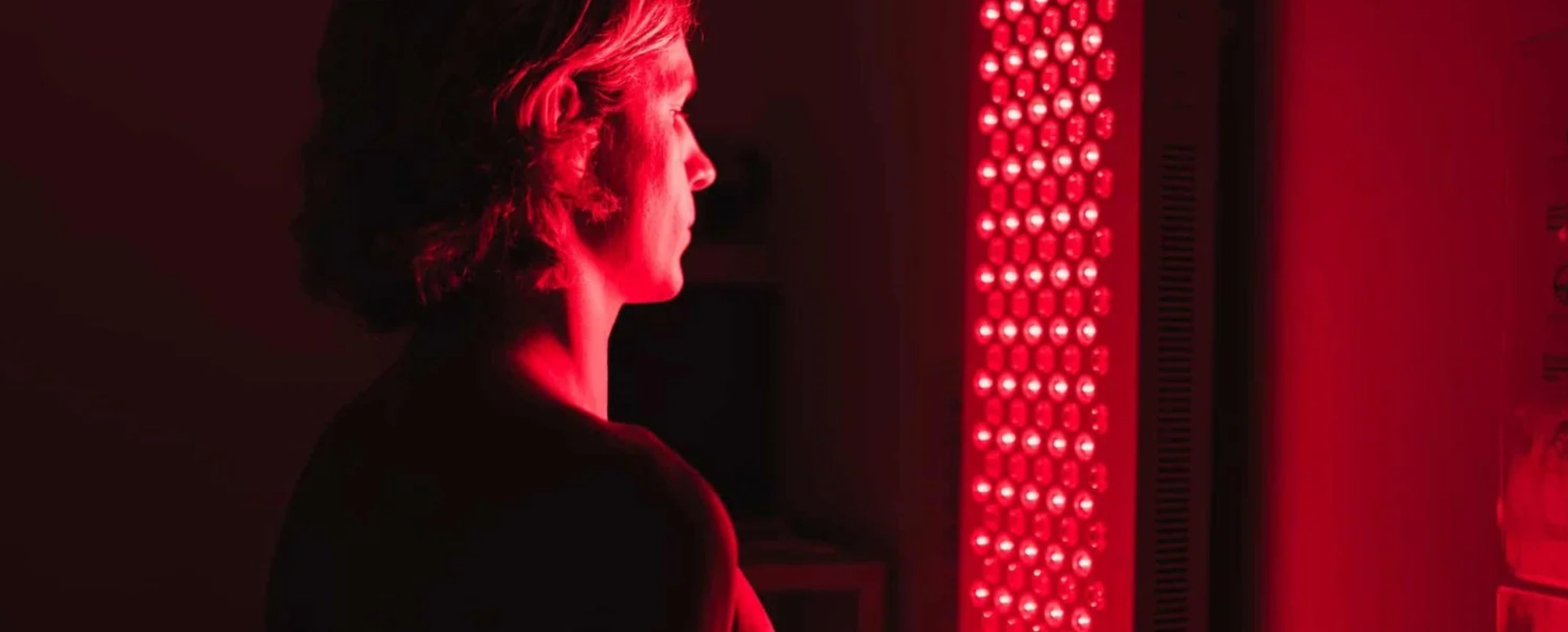
Red light therapy for the brain is best done with a helmet, which is why we built Neuronic. But the same technology has many other uses, and a panel is the natural way to bring it to the rest of the body: whole-body mitochondrial activation and deep tissue penetration that may help with pain, recovery and rejuvenation. So we compared the leading panel brands to find the one worth buying for your body.
Our pick is the Total Spectrum series from RLT Home. It puts 56% of its output into near-infrared wavelengths, including the highest published share (14%) at 1064nm, and backs that with spectrometer-verified power figures. Below, we explain how we compared the panels and where each one fits.
Quick summary: which red light panel should you choose?
- Our pick for at home red light therapy panels: RLT Home Total Spectrum, for the deepest published spectrum, single-chip 5W LEDs and honest, independently tested power figures.
- Best for: muscle recovery, stiff joints, the back and hips, and anyone who wants a whole-body session in one position.
- Choose something else if: you want an app and pulsed modes above all else (see Joovv below), or your budget is under $500 (see Mito below).
- Already using Neuronic? Keep the helmet for your head and add a panel for the body. The two cover different ground, as we explain below.
What is deep tissue red light therapy?
Deep tissue red light therapy uses red and near-infrared light that travels past the skin into muscle, tendon, joint and bone. The technique is called photobiomodulation (PBM). Researchers describe PBM as using red or near-infrared light to stimulate, regenerate and protect tissue (Hamblin, 2016). The light is absorbed by cytochrome c oxidase, an enzyme in the mitochondria, and is thought to raise cellular energy (ATP), improve local blood flow and calm inflammation.
How far light travels depends mostly on its wavelength. Visible red light (630 to 660nm) is absorbed near the surface, which is why it is associated with skin. Near-infrared light (800nm and above) scatters less and travels further into muscle and joints. This is the same reason our helmets use 1070nm near-infrared for transcranial PBM: it is the band that passes most easily through scalp and skull.
Wavelength is not the whole story, though. Power at the skin, distance and session time all change how much energy reaches deep tissue. The best deep tissue panel pairs deep wavelengths with strong, honestly measured output.
Helmet for the head, panel for the body
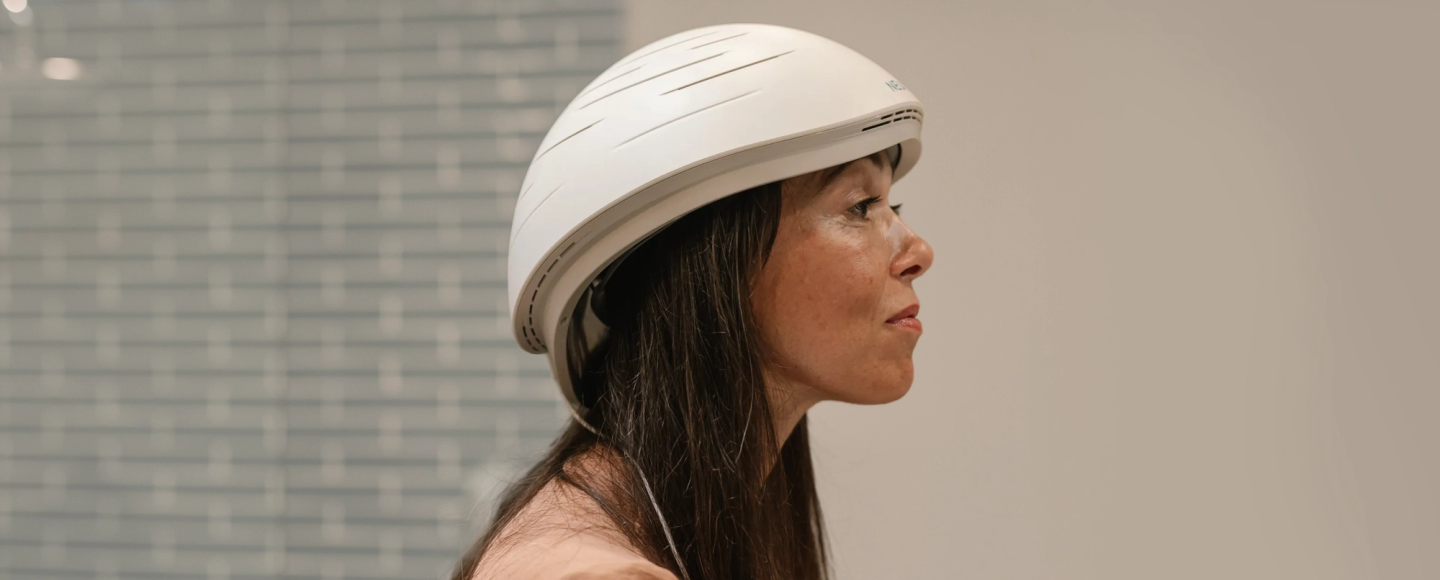
A helmet and a panel do different jobs, and many people use both. Our Neuronic LIGHT and Neuradiant 1070 helmets are shaped to the head and deliver 1070nm light evenly across the scalp, with more than 415,000 sessions completed. A knee, a lower back or a pair of hamstrings needs something different: a large, flat light source that covers a wide area at close range. That is a panel’s job.
| Type | Neuronic helmet | Deep tissue panel |
|---|---|---|
| Main target | The brain, through the skull | Muscle, joints and large body areas |
| Shape | Curved to fit the head | Flat, to cover the back, hips and legs |
| Typical goals | Focus, memory and mental energy | Muscle recovery, stiffness, back and hips |
| How it is used | Worn on the head, hands-free | Stand in front of it or lie beneath it |
| Coverage | The head | From one joint to the whole body |
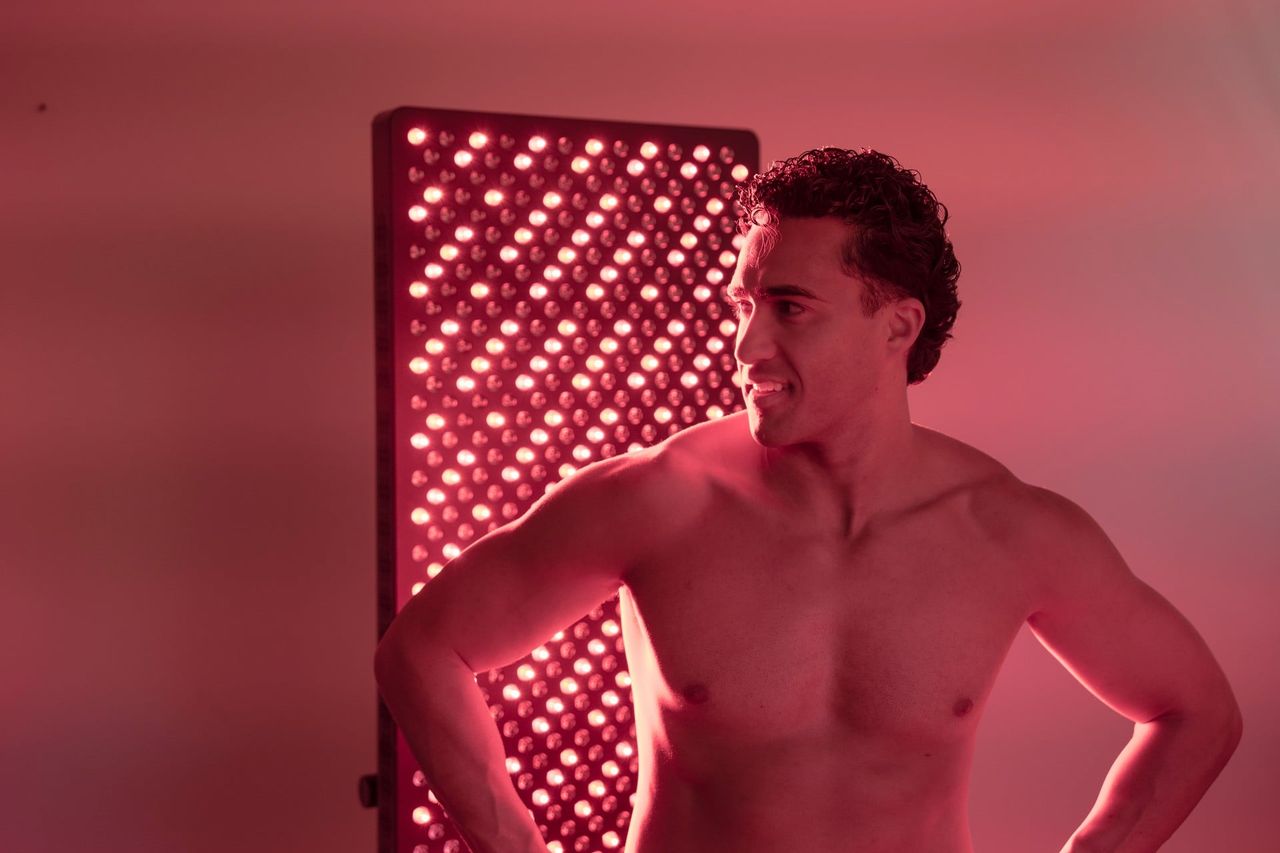
How do you choose the best red light panel for deep tissue?
Judge a deep tissue panel on how much of its power reaches the deep bands, not on its headline wattage. We scored each panel on seven criteria:
- Deep-band allocation. The share of output at 810nm and above, and especially at 1000nm and above. Many panels list a deep wavelength but give it only a small share of the output.
- Published spectrum. Whether the brand states the exact share of each wavelength. Without it, you cannot tell how much deep light you are paying for.
- LED chip type. A single-chip LED puts all its power into one wavelength. Dual and multi-chip LEDs split power across wavelengths, lowering the peak each one reaches.
- Beam angle. A narrower beam (30°) keeps more light on the body over distance than a wide 60° beam, which spills light into the room.
- Honest irradiance. Power density measured with a spectrometer, the accurate instrument, rather than a solar meter, which tends to overstate red light output.
- Coverage. Whether one panel reaches the back, hips and legs at once, or you need several panels chained together.
- Cost and risk. The full price including a stand, the trial length, restocking fees and warranty.
Which red light panels are best for deep tissue?
The table below compares RLT Home with four other leading panels on the criteria above. RLT Home puts the largest published share of its output into the deepest band, 14% at 1064nm. BlockBlueLight is the closest rival at 9%.
Table: Red light panels for deep tissue compared (November 2026)
| Panel | Wavelengths | Output at 810nm and above | Deepest band and share | Best for |
|---|---|---|---|---|
| RLT Home Total Spectrum | 7 (480 to 1064nm) | 810nm - 19% 830nm - 14% 1064nm - 14% Overall: 56% | 1064nm, 14% | Deep tissue, joints and full-body sessions |
| BlockBlueLight | 7 (590 to 1060nm) | 50% | 1060nm, 9% | Amber light and a long warranty |
| PlatinumLED BioMax | 7 (480 to 1060nm) | 50% but very low allocation for: 810nm 5%, 830nm 5%, 1060nm 4% | 1060nm, 4% | Modular setups built over time |
| Mito Red Light | 4 to 8, by model (590 to 940nm) | About 51% | 940nm, flagship only | Lower entry prices and many sizes |
| Joovv | 2 (660 and 850nm) | 50% | 850nm, 50% | App control and pulsed modes |
Why do we think RLT Home is the best red light panel for deep tissue?
RLT Home is the best choice for most people who want deep tissue coverage at home because it combines the deepest published spectrum with full-power LEDs, verified irradiance, usage plan, science backed pre-built ready to go modes and everything you need in the box.
What makes RLT Home’s spectrum different?
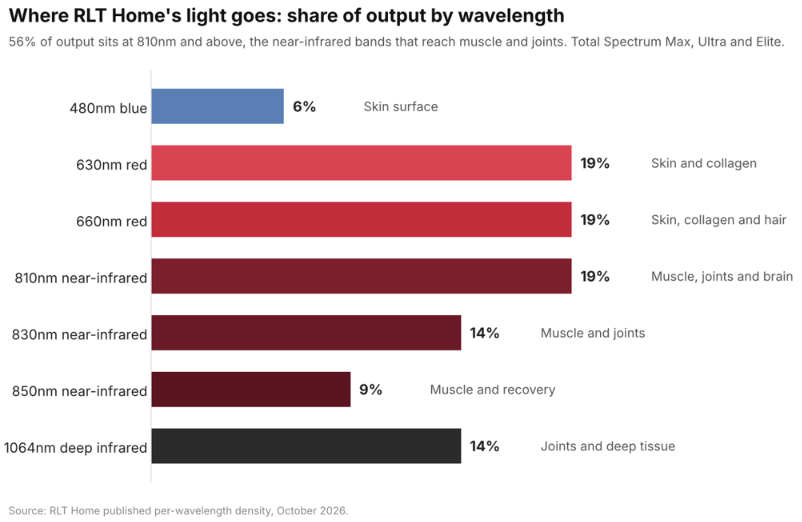
RLT Home weights its spectrum toward depth instead of splitting it evenly. It gives 19% of its LEDs to 810nm, 14% to 830nm and 14% to 1064nm, so a third of its output sits at the two deepest-reaching bands. Every model carries all seven wavelengths, including the entry-level Mini. Its 1064nm band sits right beside the 1070nm we chose for the brain, in the same deep-infrared region.
Why does single-chip matter for depth?
Each RLT Home LED is a single-chip 5W diode, so the full 5 watts drive one wavelength. Dual and multi-chip LEDs share their power between wavelengths, which lowers the peak each one reaches. At the source, a single-chip LED can exceed 400 mW/cm² against roughly 200 mW/cm² for an equivalent dual-chip LED, and that extra power is what lets you move in close for deep tissue. Single-chip design is also what makes the spectrum tunable: you cannot give a band 19% of output if every LED emits a fixed mix.
How much power reaches the body?
RLT Home publishes spectrometer-verified irradiance for every model, from 98.7 mW/cm² (Mini) to 121.6 mW/cm² (Elite) at 6 inches, and has the figures tested by two independent labs. A focused 30° beam holds more of that power over distance than the 60° beam most panels use. In independent testing against four leading panels, RLT Home delivered the highest irradiance at 24, 36 and 48 inches. The Ultra adds a multi-beam lens system (15°, 30° and 60°) that keeps light on the body and away from the room.
What does the supporting data show?
RLT Home’s nine built-in treatment modes were built by filtering a database of around 8,980 photobiomodulation studies down to 1,861 human trials with positive results, so the wavelengths and settings change with the goal rather than acting as timers. The company also maintains a public evidence library of 3,004 human studies, and every customer receives a free personalized weekly plan from its science team, setting mode, distance, position and session length for their goals.
How easy is it to use at home?
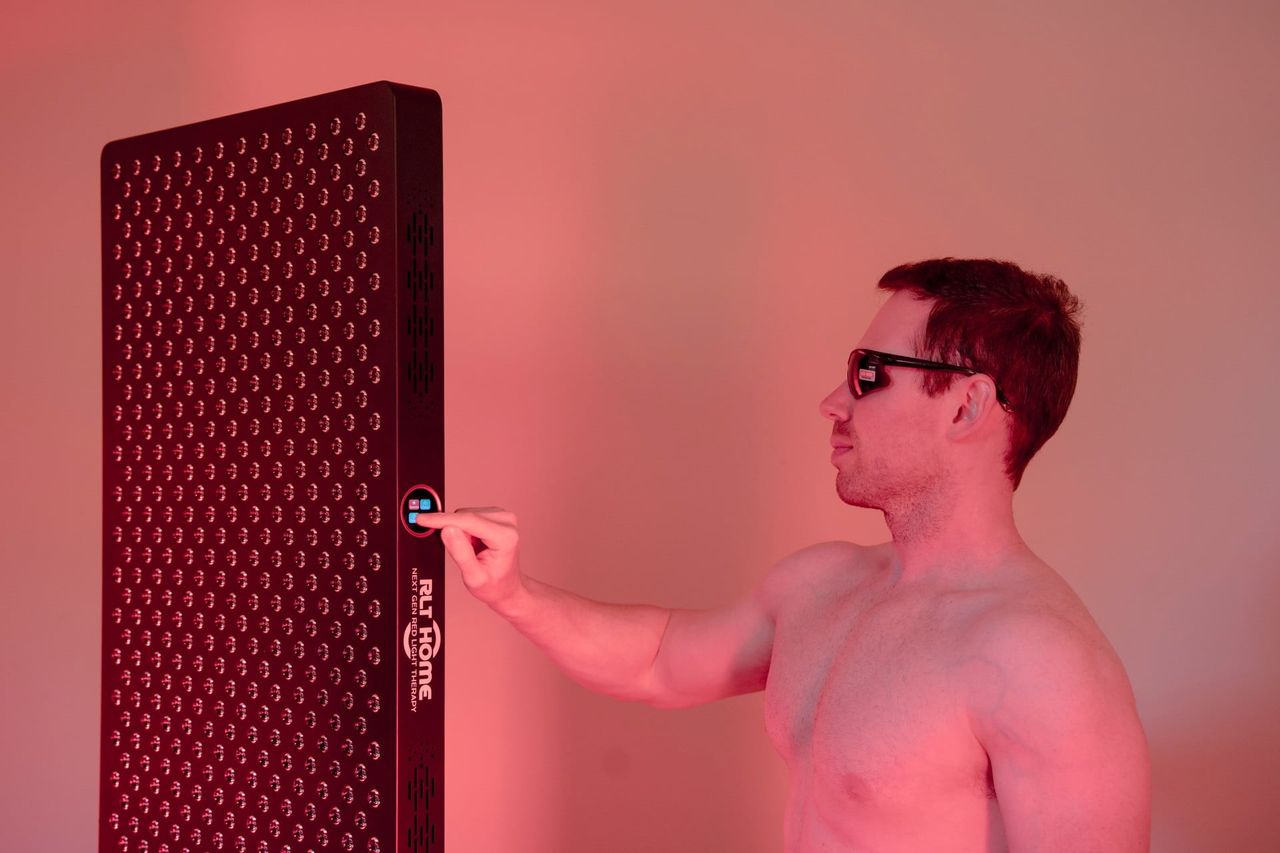
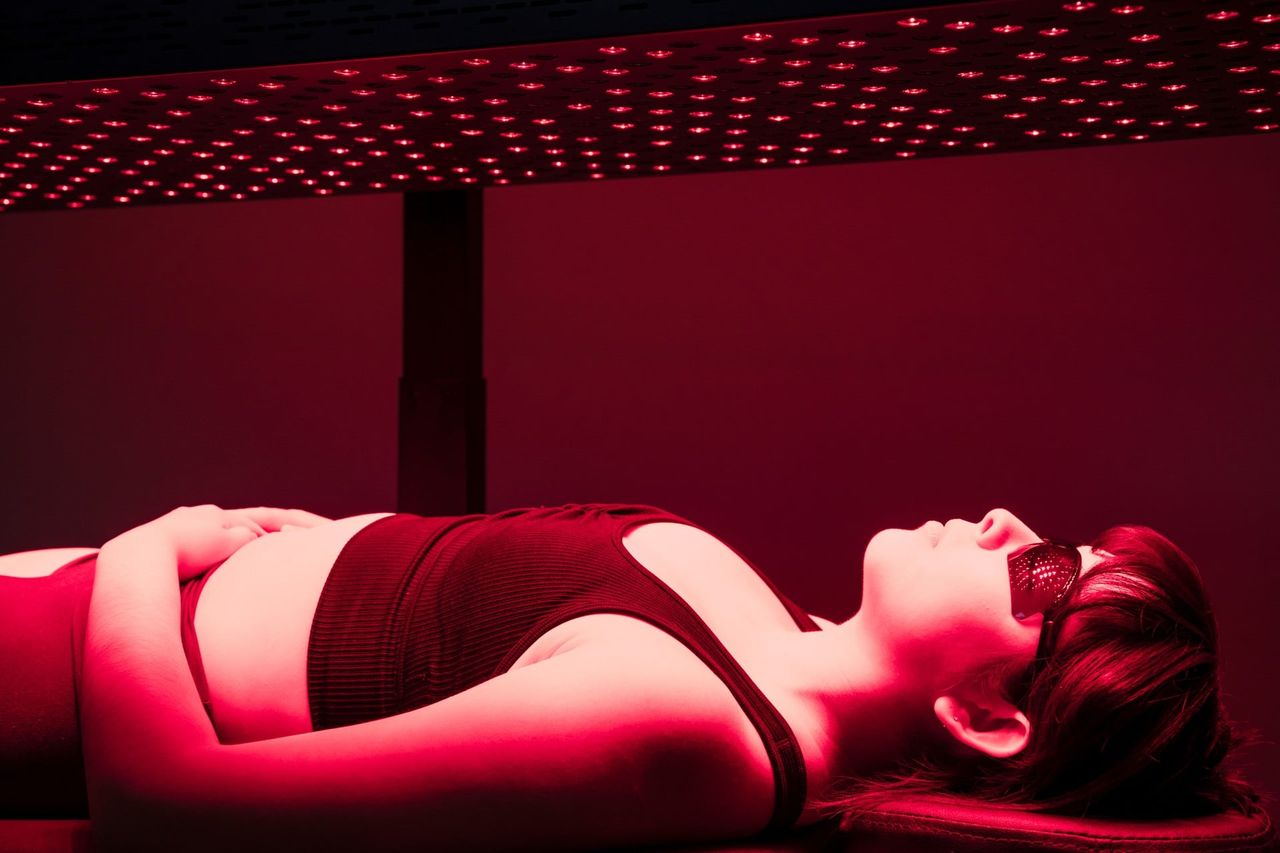
Every Total Spectrum panel ships with a stand, and the Ultra and Elite come on a motorized stand that tilts flat so you can lie beneath the panel. The panels run offline with no app and no data tracking, so a session is as simple as switching on, choosing a mode and setting a timer. Two sets of eye protection are in the box, along with free insured shipping. Most people run 10 to 20 minute sessions a few times a week, following the plan RLT Home writes for them.
What does RLT Home cost, and is it worth it?
The Total Spectrum series runs from $595 for the Mini to $4,595 for the full-body Elite, with the stand included on every model. Used daily for a year, a $1,795 Max works out at under $5 a session. Every panel comes with a 60-day trial with no restocking fee, a 3-year warranty and HSA and FSA eligibility, so the risk of trying one is low.
| Model | LEDs | Size | Peak irradiance at 6 inches (spectrometer) | Price |
|---|---|---|---|---|
| Mini | 72 | 11.8 by 11.4 inches | 98.7 mW/cm² | $495 |
| Compact | 216 | Tabletop | 99.0 mW/cm² | $995 |
| Max | 360 | 49.2 by 11.8 inches | 100.5 mW/cm² | $1,695 |
| Ultra | 480 | 64.3 by 11.8 inches | 119.3 mW/cm² | $2,795 |
| Elite | 864 | 65 by 20.5 inches | 121.6 mW/cm² | $4,595 |
Which panel is best for each situation?
Best for muscle recovery after training
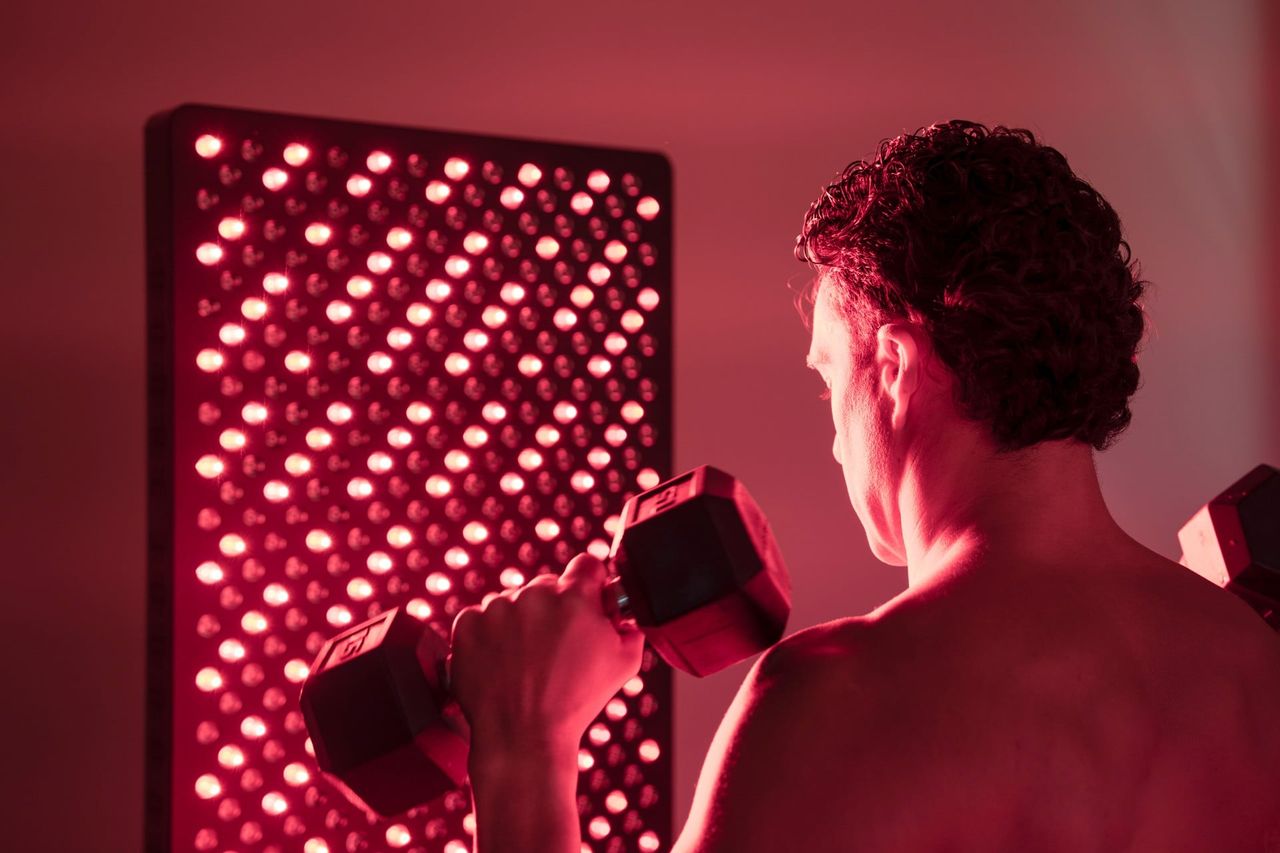
Post-exercise recovery is one of the better-studied uses of red light. A 2025 meta-analysis found photobiomodulation reduced delayed-onset muscle soreness and helped strength recover after exercise, with near-infrared favored for its depth (Tsou et al., 2025). A full-body panel such as the Ultra treats the legs, back and shoulders in one session.
Best for stiff knees and joints
Joints sit below skin, fat and muscle, so they need the deepest bands. Reviews of knee osteoarthritis trials report less pain and stiffness, most clearly when sessions follow recommended doses (Zhang and Ji, 2023). RLT Home’s 14% at 1064nm makes it the strongest fit here. The Mini or Compact suits a single knee or shoulder at close range.
Best for the back and hips
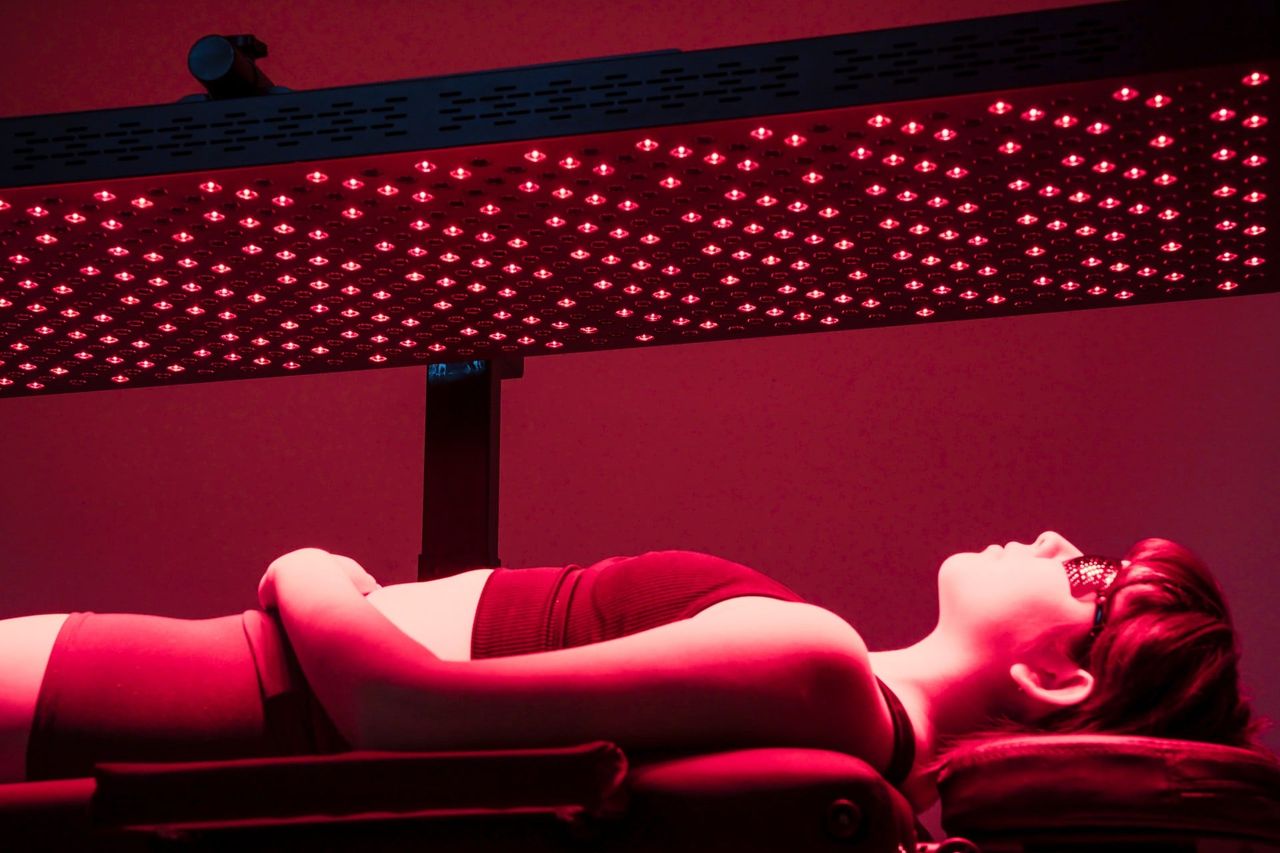
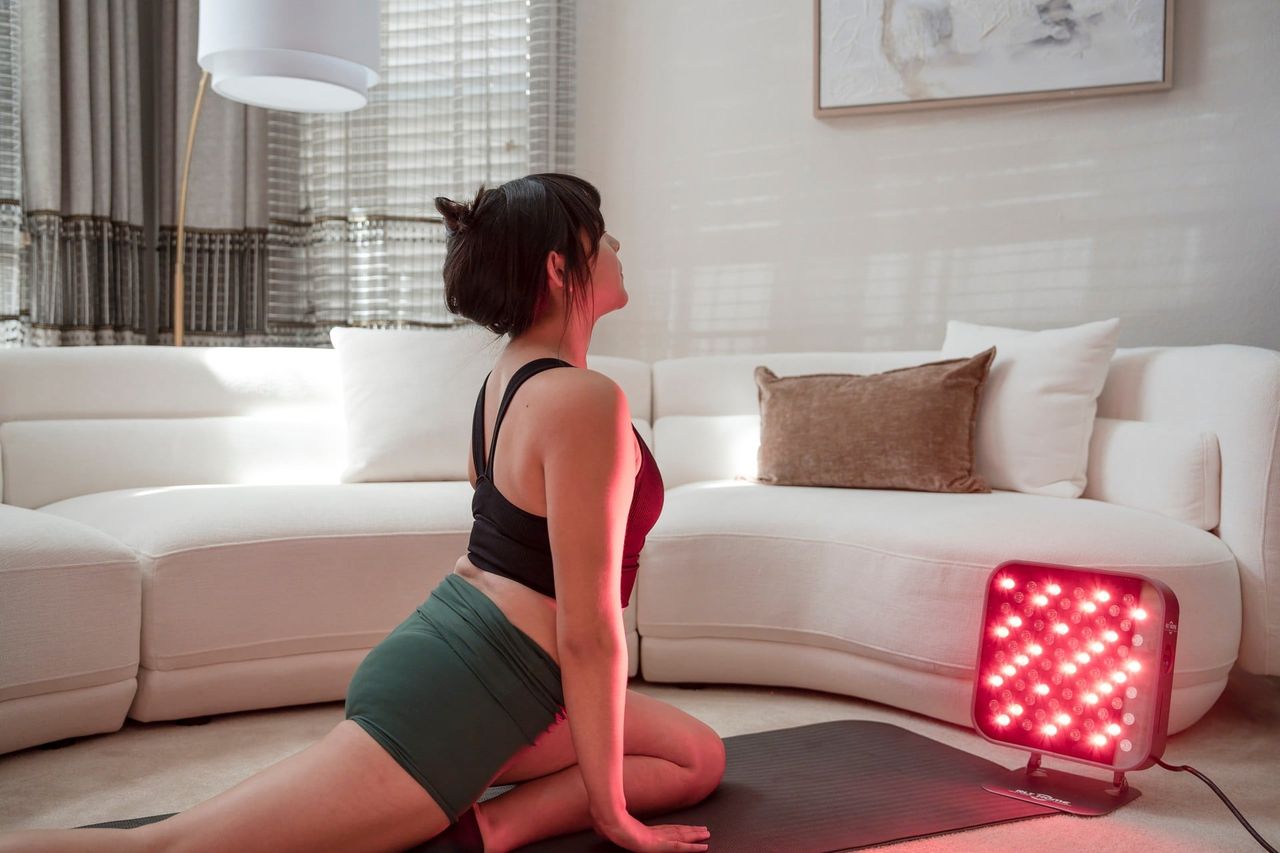
Large areas need large, even coverage at close range. The Ultra (64.3 inches tall) and Elite (65 by 20.5 inches) cover the back, hips and legs in one position, and the motorized stand tilts flat so you can lie underneath rather than stand.
Best for everyday stiffness and general wellness
For day-to-day stiffness, a panel you will actually use matters more than one you set up once a week. A stand-mounted Max or Ultra stays in place and is ready in seconds, which is what keeps a routine going.
Best for pairing with your Neuronic helmet
If you already use Neuronic for focus and memory, a deep tissue panel brings the same photobiomodulation approach to the rest of the body. Use the helmet for your head and the panel for muscles and joints, on the same days or on alternate ones.
How do the other top panels compare?
Four other panels come up most often in searches for deep tissue red light therapy. Each profile follows the same structure, and each brand has real strengths.
BlockBlueLight
- What it is: a seven-wavelength panel range that includes 590nm amber and 1060nm deep infrared.
- Who it suits: buyers who value transparency and a long warranty.
- Strengths: publishes per-wavelength density and both solar and spectrometer irradiance, and offers a 5-year warranty, the longest here.
- Consider if: you want amber light for skin and mood. For depth, note that 9% of output is at 1060nm, it uses dual-chip LEDs with a 60° beam, and returns are 30 days.
PlatinumLED BioMax
- What it is: a long-established panel line with seven wavelengths and single-chip LEDs.
- Who it suits: buyers who want to start with one panel and add more over time.
- Strengths: 15 years in the category, modular expansion, app and voice control, and third-party verified irradiance.
- Consider if: modularity matters most. For depth, 850nm makes up 36% of total output, with 5% at 810nm, 5% at 830nm and 4% at 1060nm, and its LEDs run at 3W with a 60° beam.
Mito Red Light
- What it is: a broad panel range from compact to full-body sizes.
- Who it suits: buyers looking for a lower entry price and plenty of sizes.
- Strengths: competitive pricing and third-party verified irradiance.
- Consider if: budget comes first. For depth, no Mito panel includes 1064nm; the deepest band is 940nm, on the flagship only.
Joovv
- What it is: one of the best-known panel brands, with an app and modular panels.
- Who it suits: buyers who want a polished app, pulsed modes and a recognized name.
- Strengths: brand recognition, the Recovery+ pulsed mode and modular stacking.
- Consider if: app features matter more than spectrum. Every Joovv panel emits two wavelengths, 660nm and 850nm, with no 810nm or 1064nm, and carries a 2-year warranty.
Does deep tissue red light therapy actually work?
The evidence is encouraging for several uses and mixed for others. Results are clearest when trials use well-defined doses, which is why honest power figures matter.
- Musculoskeletal pain. A systematic review and meta-analysis found low-level laser and light therapy reduced pain across a range of musculoskeletal disorders (Clijsen et al., 2017).
- Knee osteoarthritis. Reviews report meaningful reductions in pain and stiffness, strongest at doses recommended by the World Association for Photobiomodulation Therapy (Zhang and Ji, 2023).
- Muscle soreness and recovery. A 2025 meta-analysis found less delayed-onset soreness and faster strength recovery after exercise (Tsou et al., 2025).
- How much 1064nm adds. A 2023 lab study found 1064nm light passed through skin and muscle slightly better than 905nm in the top 10mm, but the gap was modest, and the authors noted that power mattered too (Kaub and Schmitz, 2023). That is why we weight both spectrum and verified irradiance in our criteria.
- Where it is mixed. Results for non-specific low back pain are inconsistent, and individual responses vary.
Red light panels are general wellness devices. They are not intended to diagnose, treat, cure or prevent any disease, and they are not a substitute for care from your doctor or physiotherapist.
Frequently asked questions
How deep does red light penetrate?
Visible red light (630 to 660nm) acts mostly in the skin. Near-infrared light (810 to 850nm) travels further, into muscle and joint tissue, and 1064nm scatters least of the common therapy wavelengths. The exact depth also depends on power, distance and the tissue itself, so wavelength is only part of the picture.
Is near-infrared better than red light for deep tissue?
Yes. Red light is absorbed near the surface, which suits skin goals. Near-infrared at 810, 830, 850 and 1064nm reaches muscle, tendon and joints. A panel that gives a large share of its output to these bands delivers more light where deep aches and stiffness sit.
Is 1064nm better than 850nm?
1064nm scatters less in tissue and can travel slightly further than shorter near-infrared light, though lab studies show the difference is modest. Its value is in adding depth alongside 810 to 850nm, not replacing them. Many panels skip 1064nm entirely or give it a small share of output.
How far should I stand from a red light panel?
Closer distances deliver more power to the skin and more energy to deep tissue. Most deep tissue sessions run at about 6 to 12 inches. Follow your panel’s guidance; RLT Home customers receive a personalized plan that sets distance, session length and weekly frequency for their goals.
Can I use my Neuronic helmet on my body?
Neuronic is designed for the head. Its curved shell holds light close to the skull, a shape that does not fit a knee, back or thigh. For muscles and joints, a flat panel is better suited, and many of our users pair the two.
Are red light panels safe to use at home?
Red light panels are low-risk general wellness devices when used as directed. Wear the supplied eye protection, start with shorter sessions and stop if your skin feels hot. Speak to your doctor first if you are pregnant, take light-sensitizing medication or have a medical condition.
How long until I notice results?
It varies by goal. Some people notice less soreness after a few sessions, while joint stiffness usually takes several weeks of regular use. Consistency matters more than session length, which is why a simple, repeatable routine works best.
Our recommendation
For the brain and head, we built Neuronic. For deep tissue on the body, our pick is the RLT Home Total Spectrum series: 56% of its output in the near-infrared bands, the largest published share at 1064nm, single-chip 5W LEDs and spectrometer-verified irradiance. Choose the Mini or Compact for a single joint, and the Ultra or Elite for full-body sessions.
Explore RLT Home’s range of the best red light therapy panels.
How we evaluated: we compared five leading home panels on published wavelengths, per-wavelength density, chip type, beam angle, irradiance method, warranty and returns terms as of November 2026, weighting deep-band allocation and published transparency most heavily because they decide how much light reaches deep tissue. Neuronic and RLT Home have a content partnership, and RLT Home supplied its product specifications. We recommend RLT Home for the body because its panels complement our helmets rather than compete with them.
References
- Clijsen, R., Brunner, A., Barbero, M., Clarys, P., and Taeymans, J. (2017). Effects of low-level laser therapy on pain in patients with musculoskeletal disorders: a systematic review and meta-analysis. European Journal of Physical and Rehabilitation Medicine, 53(4), 603-610. doi:10.23736/S1973-9087.17.04432-X
- Hamblin, M. R. (2016). Shining light on the head: Photobiomodulation for brain disorders. BBA Clinical, 6, 113-124. doi:10.1016/j.bbacli.2016.09.002
- Kaub, L., and Schmitz, C. (2023). Comparison of the penetration depth of 905 nm and 1064 nm laser light in surface layers of biological tissue ex vivo. Biomedicines, 11(5), 1355. doi:10.3390/biomedicines11051355
- Tsou, Y. A., Chang, N. J., and Chang, W. D. (2025). Effects of photomodulation therapy for delayed onset muscle soreness: a systematic review and meta-analysis. Journal of Functional Morphology and Kinesiology, 10(3), 277. doi:10.3390/jfmk10030277
- Zhang, Y., and Ji, Q. (2023). Current advances of photobiomodulation therapy in treating knee osteoarthritis. Frontiers in Cell and Developmental Biology, 11, 1286025. doi:10.3389/fcell.2023.1286025
This article is general information, not medical advice. Light therapy devices are general wellness products and are not intended to diagnose, treat, cure or prevent any disease. Consult a qualified health professional about your individual needs.

Neuronic LIGHT
$1,795excl. sales tax
At-home near-infrared brain stimulation designed to support clarity, focus, and long-term cognitive wellness.
- 90-Day Return Policy
- Backed by Research
- Free Shipping
- One Year Warranty