


What Is Transcranial Photobiomodulation? How It Works
![[object Object]](https://cdn.sanity.io/images/h29o7kl4/staging/0c0476690b5e49f9a375deb663c4d52aa39fa8e2-352x351.heif?w=352&q=80&auto=format&fit=max)
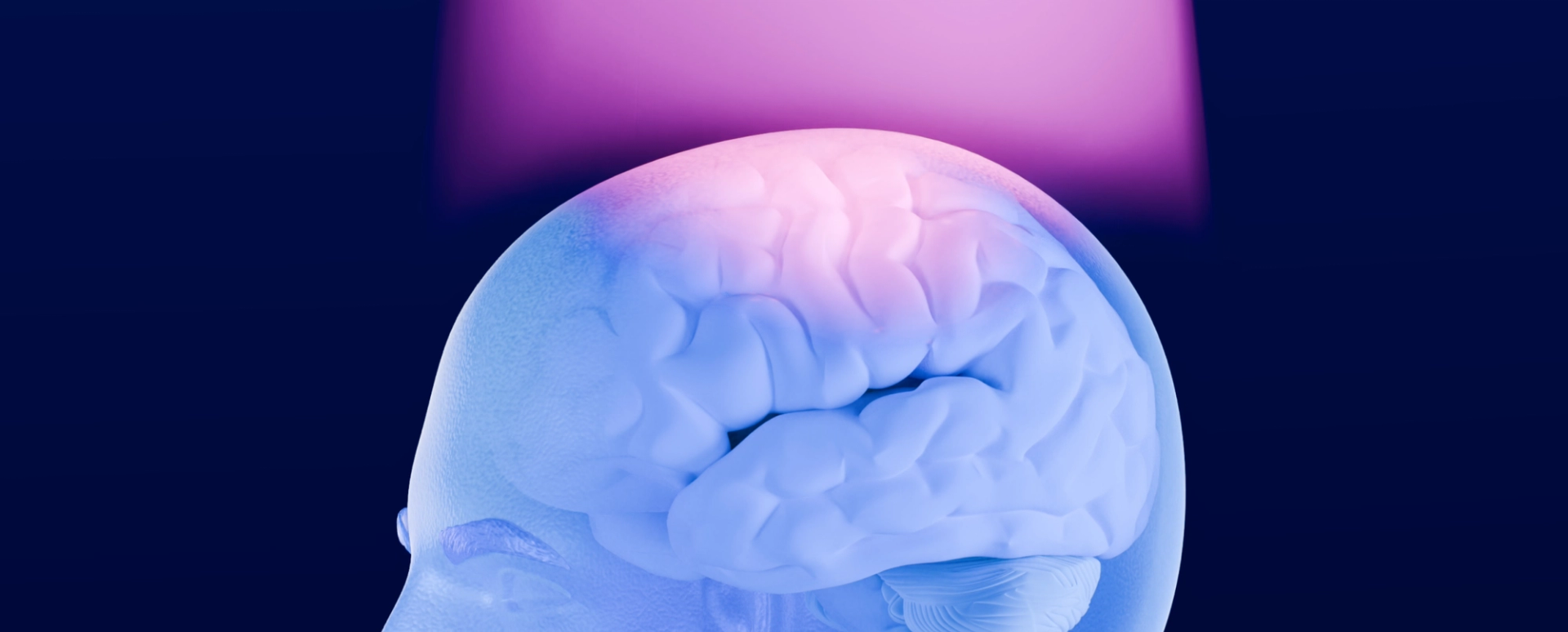
Transcranial photobiomodulation (tPBM) might sound like something out of a sci-fi movie, but it’s actually based on well-established neuroscience. Instead of forcing your brain to do something unnatural, tPBM works in the background supporting the basic biological processes your brain already relies on to function, recover, and adapt.
In a nutshell, tPBM is a non-invasive therapy that uses red and near-infrared light to stimulate brain cell activity through the scalp and skull. It works by delivering specific wavelengths of light that are absorbed by mitochondria in brain cells, boosting cellular energy production (ATP), improving blood flow, and reducing inflammation, processes linked to better cognitive function, mood, and recovery.
This light is delivered at safe, non-heating levels, that interacts with your brain cells at a very fundamental level. Let’s walk through what happens, step by step, from the moment the light is switched on.*
*The following mechanisms are based on the paper Mechanisms and Mitochondrial Redox Signaling in Photobiomodulation (Hamblin, 2018).
1. The Light Reaches the Brain
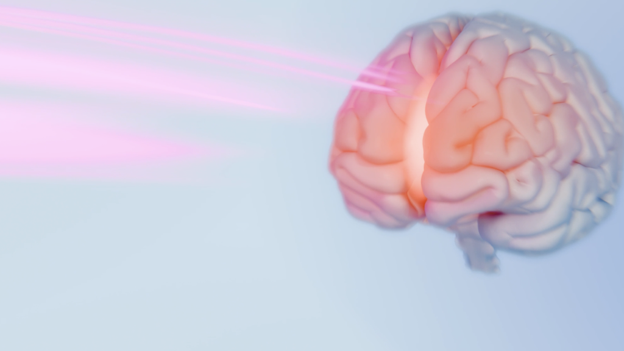
tPBM uses specific wavelengths of near-infrared light (generally between about 800 nm and 1070 nm) that are able to pass through the hair, scalp, and skull to reach the brain.
Many studies focus especially on the prefrontal cortex - the area involved in things like focus, mood, decision-making, and emotional regulation. The light isn’t there to “zap” neurons, it’s there to support, restore and regulate naturally occurring cellular processes.
2. The Mitochondria – Your Brain’s “Power Plants” Absorb the Light
Inside each brain cell are mitochondria, colloquially known as the "powerhouse of the cell” but formally known as the tiny structures responsible for making energy. One key mitochondrial enzyme, called cytochrome c oxidase, happens to be sensitive near-infrared light.
When this enzyme absorbs light, it becomes more efficient at doing its job. In simple terms: your brain cells get better at making energy in the form of adenosine triphosphate (ATP).
3. A Roadblock Is Cleared
Under stress or inflammation, a molecule called nitric oxide can stick to cytochrome c oxidase in the same spot that oxygen needs to bind to trigger ATP production. This slows things down, preventing oxygen from being used properly.
Light helps knock that nitric oxide loose. Once it’s out of the way, oxygen can bind again and energy production can resume normally.
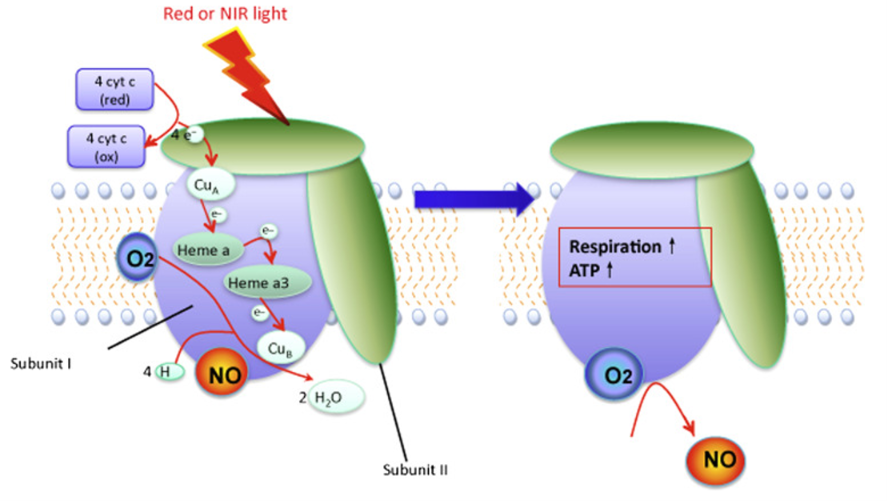
The effects of PBM on the electron transport chain (Image Source: Scientific Research).
4. Energy Production Turns Back On
With oxygen flowing properly, the mitochondria are able to more efficiently execute their full energy-making process. This allows cells to produce more ATP, the fuel your brain uses for basically everything from firing signals to repairing itself.
5. More ATP = A Brain That Has the Energy to Function
When ATP levels increase, neurons are better equipped to:
- Communicate with each other
- Repair and maintain connections
- Support learning and adaptation
This is why people often associate tPBM with clearer thinking, less brain fog, and improved mental stamina.
6. A Small, Helpful Stress Signal Is Triggered
As energy production ramps up, there’s a small increase in reactive oxygen species (ROS). While that might sound concerning, this mild increase actually acts as a signal that tells cells to activate protective and adaptive pathways.
In moderation, this process helps cells become more resilient over time.
7. Blood Flow Improves
tPBM also supports better cerebral blood flow, in part because nitric oxide helps blood vessels relax and widen. This means more oxygen and nutrients are delivered to brain tissue, while waste products are cleared more efficiently.
Better circulation helps support overall brain health and recovery.
8. Inflammation Calms Down
Chronic inflammation can interfere with how well neurons communicate. Research shows that photobiomodulation can help reduce inflammatory signaling and oxidative stress, creating a more supportive environment for brain function.
With less background “noise,” the brain can operate more smoothly.
9. The Brain Becomes More Adaptable
When you combine:
- Better energy availability
- Improved blood flow
- Lower inflammation
- Healthier mitochondria
you create ideal conditions for neuroplasticity, the brain’s ability to adapt, rewire, and recover.
This is where people may notice real-world benefits like improved focus, sharper memory, better mood regulation, or faster recovery after stress or injury.
Quick Summary: What tPBM Supports
During a typical tPBM session:
- Light reaches the brain
- Mitochondria absorb the photons
- Energy production improves
- Blood flow increases
- Inflammation is reduced
- Brain cells communicate more efficiently
Final Thought: Supporting What Your Brain Already Knows How to Do
tPBM isn’t about pushing your brain beyond its limits or overriding natural processes. It’s about supporting the systems your brain already uses to regulate, repair, and perform.
Rather than a shortcut or a hack, think of it as a gentle reminder to your brain cells: You’ve got the tools - here’s a little extra support.
References:
Hamblin, M. R. (2018). Mechanisms and mitochondrial redox signaling in photobiomodulation. Photochemistry and Photobiology, 94(2), 199–212.https://doi.org/10.1111/php.12864

Neuronic LIGHT
$1,795excl. sales tax
At-home near-infrared brain stimulation designed to support clarity, focus, and long-term cognitive wellness.
- 90-Day Return Policy
- Backed by Research
- Free Shipping
- One Year Warranty