


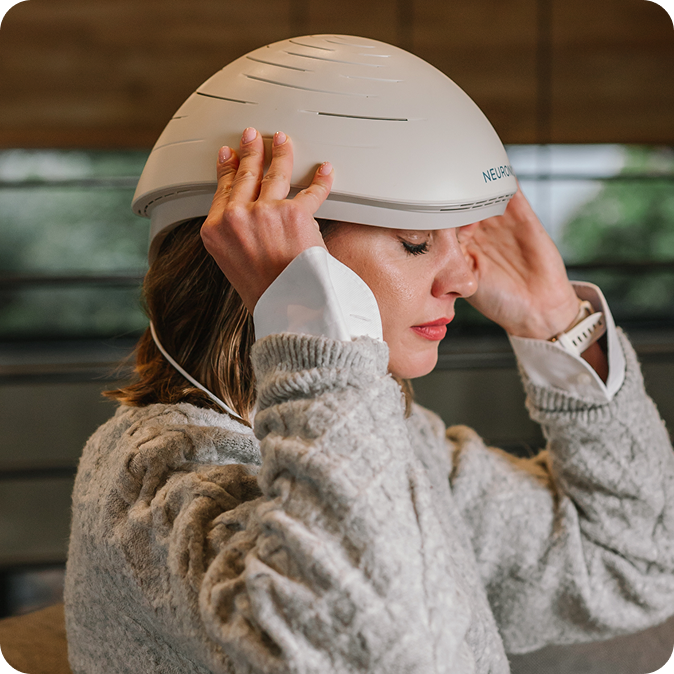
All Profits Are Reinvested into Research & Development
100% of profits go back into the clinical research and product development working toward medical approval. Every Neuronic device sold helps move that work forward.
6
Completed Studies
5
Ongoing Studies
9
Planned Studies
110+
Active Research Participants





About this page: This page presents a selection of published, planned, and ongoing studies. It is not a complete record of the research in this field.
What appears here is limited by factors outside our editorial control: rights retained by authors and publishers, legal and regulatory requirements, and country-specific rules governing how medical device research may be presented. This page may therefore not appear the same to visitors in other locations.
Published Studies
Note: This section includes Neuronic's peer-reviewed journal articles, published case series, and pre-print manuscripts across the field of photobiomodulation and light therapy.
 Published
tPBM and Neurofeedback in PANS/PANDAS
Retrospective case series describing two adolescents with complex PANS/PANDAS histories who received 1070 nm transcranial photobiomodulation (tPBM) and swLORETA neurofeedback as part of routine multidisciplinary care.
 Published
Alzheimer’s Disease & Mild Cognitive Impairment EVANTHEA Trial
This randomized controlled trial evaluated a nine-month personalized precision medicine program for adults with mild cognitive impairment or early-stage dementia. The program combined lifestyle and medical interventions, including photobiomodulation at most sites using devices such as the Neuronic Neuradiant 1070. Participants showed significantly greater improvements in cognition, memory, executive function, processing speed, and cognitive symptoms compared with standard care.
 Published
Attention & Memory
This study evaluated the effects of tPBM on cognitive performance, specifically in tasks involving vigilance and working memory. The research compared active tPBM with sham stimulation during cognitive tasks and observed neurophysiological effects, including changes in processing speed and stress measures. While preliminary due to a small sample, results are interpreted as supporting further exploration of tPBM’s role in augmenting cognition.
 Published
Anxiety and Depression
Recurrent depression and anxiety can be resistant to monotherapies, including psychotherapy, eye movement desensitization and reprocessing (EMDR), and selective serotonin reuptake inhibitors (SSRIs). Over a 12-week tPBM protocol, participants reported improvements in sleep quality, irritability, and depression scores, though anxiety outcomes varied across measures. These preliminary findings suggest that tPBM may offer supportive benefits alongside conventional treatments.
 Published
COVID-19 Brain Fog
This study looked at the effects of photobiomodulation (PBM) therapy on long COVID symptoms like chronic fatigue and brain fog. It tested two devices: a helmet (tPBM) and a whole body light bed. Cognitive tests and brain activity measured before and after the therapy showed significant improvements. The findings suggest that PBM intervention, whether for the brain or body, may help treat brain fog in Long COVID patients.
 Published
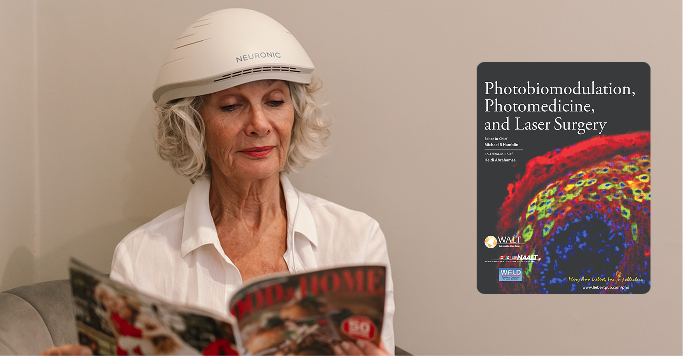
Transcranial Photobiomodulation Variables Assessment Battery: Development and Validation
This paper develops and validates a brief self-report tool capturing biophysical factors, lifestyle variables, and trait wellbeing that may influence or contextualize tPBM response. It evaluates the battery’s validity and reliability to support more consistent measurement of participant-level factors in real-world tPBM research.





Published Whitepapers, Pilots and Case Studies
 Pilot
PilotPBM for APOE4 Carriers
Over four months, 25 adults added daily Neuronic LIGHT sessions to their routine, showing improved scores on memory-related exercises and one participant recording better sleep on session nights.
 Case Study
tPBM for POTS and EDS
This case study examines tPBM in Patient M, who has complex multisystem illness, including Postural Orthostatic Tachycardia Syndrome (POTS), Ehlers-Danlos syndrome (EDS) and seizure-like episodes. The report documents progressive improvements in energy, sleep, cognitive function, exercise tolerance, and functional independence following individualized tPBM protocols.
 Case Study
Rewiring the Brain with Light
Client I.T. was a typical 40-year-old mother and pharmaceutical sales rep living in Vancouver when her life changed dramatically after a car accident in 2019. What seemed like a mild concussion turned into years of navigating brain fog, anxiety, sensory overload, and fatigue.
 White Paper
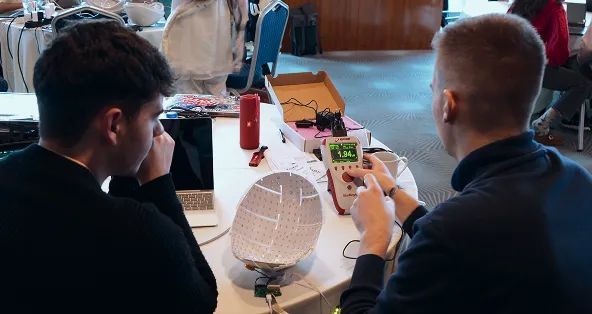
Neuronic's Journey to Understanding Light #1
At Neuronic we have a commitment to being leaders in the field by ensuring our data, devices, and reporting meet the industry’s highest standards of transparency. The following article shares our approach to accurate measurement, the importance of each key metric (total power, irradiance, and peak wavelength), and why clarity matters more than ever.
 Case Study
NeuroCatch® Study
This case study used a photobiomodulation (PBM) protocol with the Neuradiant 1070 device on a healthy individual, set at 70 Hz for 12 minutes at 75% intensity. Brain activity was then recorded with the NeuroCatch® Platform, which measures amplitude (brain activity strength) and latency (response speed).


Studies in Progress
 In Progress
MCI and Alzheimer’s Pilot RCT
This randomized, sham-controlled pilot trial will evaluate Neuronic tPBM in individuals with mild cognitive impairment (MCI) and early to moderate Alzheimer’s disease. The study will compare active tPBM with sham treatment, assessing preliminary effects on cognition, memory, daily functioning, safety, tolerability, and treatment adherence.
 In Progress
ADHD Study
Investigating the Individual and Combined Effects of Photobiomodulation (PBM) and Virtual Reality (VR) Interventions on ADHD Symptoms.
 In Progress
Fatigue-PBM RCT
This pilot double-blinded, randomized, placebo-controlled trial compares the effects of pulsed and continuous transcranial photobiomodulation (tPBM) to a placebo in individuals with chronic fatigue. The study aims to assess the efficacy of different tPBM protocols in managing chronic fatigue.
 In Progress
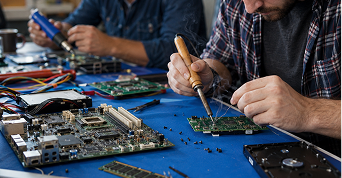
Ongoing Research with University of Nottingham
Neuronic is partnering with the University of Nottingham to study tPBM's effects on brain hemodynamics using neuroimaging.
 In Progress
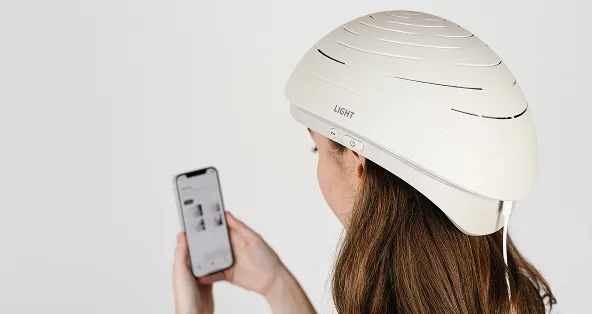
The Biggest PBM Study Ever
At Neuronic, we are conducting internal research to strengthen the scientific foundation of our photobiomodulation (PBM) device and contribute to the growing body of literature on this promising modality. Our work integrates anonymised user data with the scientifically validated PROMIS-10, a standardised tool developed by the NIH to assess global physical and mental health.



Scientific Advisory Board
Backed by Leaders in Photobiomodulation

Liisa Laakso, PhD
Principal Research Fellow. The first Australian to complete a PhD in the field of laser therapy; recognized by the European Medical Laser Association in 2002.

Michael R Hamblin, PhD
Distinguished Visiting Professor and Former Associate Professor of Harvard Medical School with over 780 peer-reviewed articles on photobiomodulation (PBM).