

How to Improve Memory: 9 Strategies That Work
![[object Object]](https://cdn.sanity.io/images/h29o7kl4/staging/0d3cee8b2dae17d59cfa567479c79a430b33b797-500x500.png?w=500&q=80&auto=format&fit=max)
Memory-related diseases are on the rise, with new cases of Alzheimer’s disease and other types of dementia expected to double by 2050 (Alzheimer’s Association, 2026). With dementia becoming more common cognitive health is slowly becoming the center of how we think about aging. Millions of families are already navigating the slow, difficult decline that comes with progressive memory loss, often resulting in caregiver stress and eventual burnout.
That reality is exactly why learning how to improve your memory matters now more than ever - not just for people managing a diagnosis, but for anyone hoping to stay ahead of cognitive decline before it starts. Memory function isn't only about daily convenience, like recalling a name or where you left your keys. It's a core marker of long-term brain health, closely tied to neurodegenerative conditions like Alzheimer's and to neurodevelopmental conditions like autism spectrum disorder and attention-deficit/hyperactivity disorder (ADHD), where memory plays a central role in communication and adaptive behavior.
As research digs deeper into how memory forms and is retrieved, effective, evidence-based strategies for memory improvement are becoming clearer. These approaches offer practical tools for sharper day-to-day recall and hold real promise for slowing cognitive decline tied to aging and neurological disorders.
Below are 10 evidence-based ways to improve your memory that you can start weaving into your routine today.
1. How to Improve Your Memory Through Regular Exercise
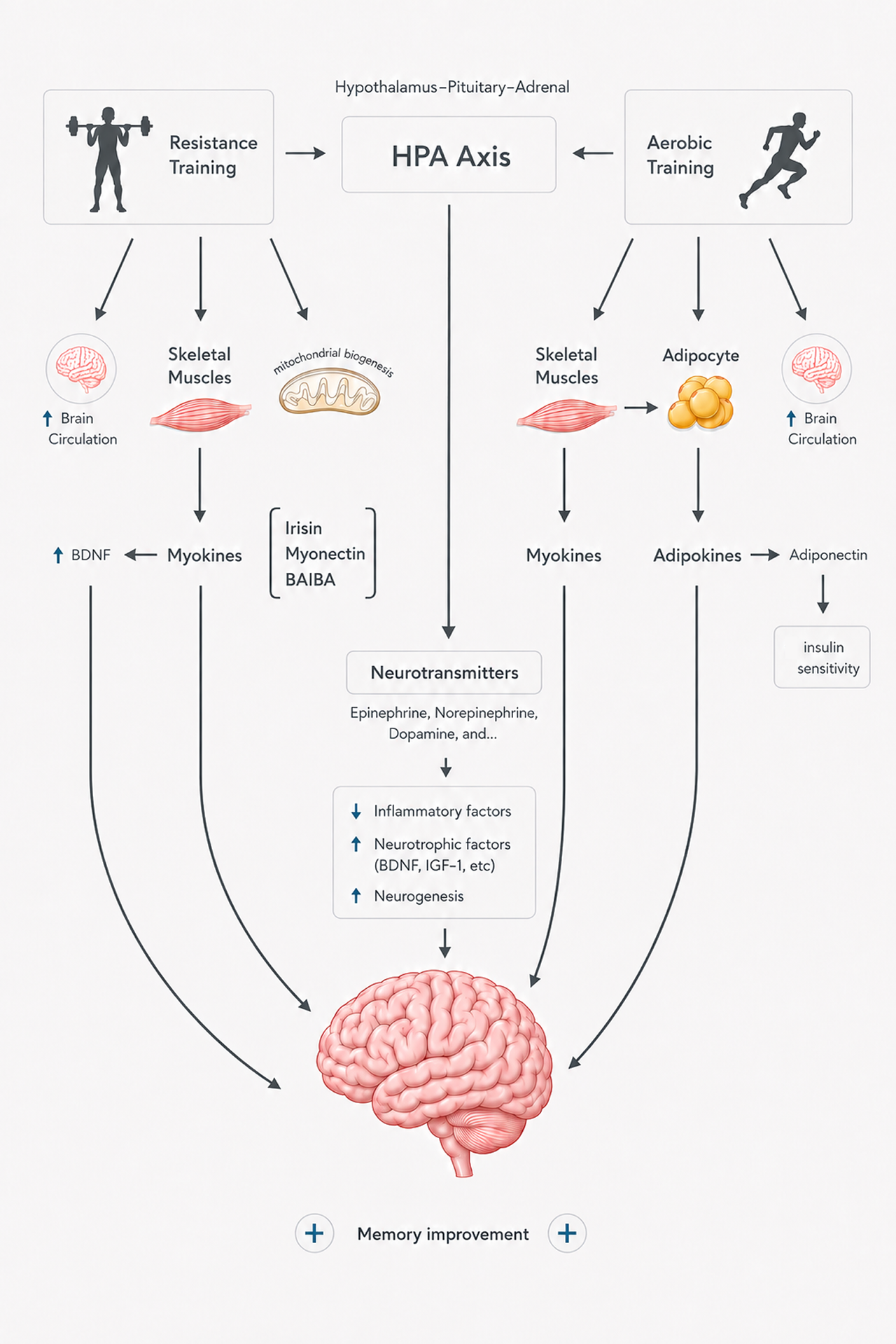
A study of older adults found that exercise training leads to improved memory performance through neuroplastic changes in the brain (Babaei & Azari, 2022). Researchers also found that sustained, moderate aerobic exercise offers particularly strong neuroprotective benefits - a meaningful finding for anyone thinking long-term about cognitive health.
Physical activity isn't just good for the body, it's one of the most reliable ways to increase your memory over time. Exercise boosts blood flow to the brain, which directly supports memory function. Aim for at least 150 minutes of moderate-intensity exercise a week: brisk walking, swimming, racket sports, or cycling all count.
2. Prioritize Quality Sleep
Research shows that quality sleep optimizes memory consolidation, while wakefulness is better suited to memory encoding (Rasch & Borne, 2013). In other words, sleep is when your brain files away what you learned during the day.
Adults should aim for 7-9 hours of quality sleep per night. Building a consistent sleep schedule and a relaxing bedtime routine is one of the simplest, most overlooked ways to improve memory retention and mental clarity.
3. Use Light Therapy
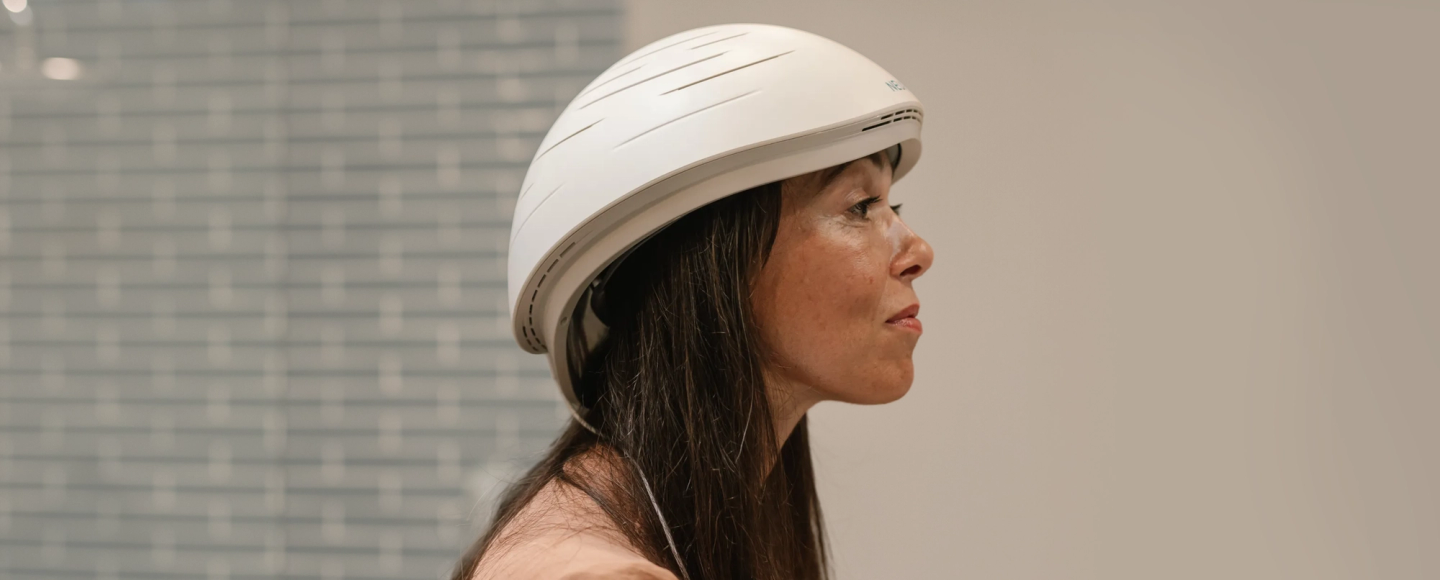
Light therapy, and specifically photobiomodulation (PBM), is one of the newer, more research-backed answers to how to increase your memory using targeted, non-invasive technology and much of the emerging evidence connects it directly to two things already on this list: sleep and memory.
Sleep deprivation is closely tied to memory impairment at a biological level. One night of poor sleep has been shown to increase beta-amyloid buildup in the brain (Shokri-Kojori et al., 2018), the same protein implicated in Alzheimer's-related cognitive decline. This is part of why poor sleep and memory loss are so tightly linked in the research.
PBM appears to work directly against this mechanism. In mouse models, transcranial near-infrared PBM reduced hippocampal oxidative stress and attenuated memory impairment caused by sleep deprivation (Salehpour et al., 2019). Human research points in a similar direction. A study from Zhao et al. (2022) found that 1064nm LED-based transcranial photobiomodulation significantly improved memory in healthy adults, specifically working memory.
Taken together, this research suggests light therapy may support memory through more than one pathway: directly, by stimulating brain regions tied to working memory, and indirectly, by supporting the deep sleep processes responsible for clearing out proteins linked to cognitive decline. Neuronic offers at-home light therapy devices designed for convenient, non-invasive brain wellness support, including memory - and sleep-related applications. Learn more about the device here.
4. Keep Learning New Things, Like an Instrument
Engaging in new learning activities stimulates the brain and helps improve memory over time. Learning a new language, picking up a musical instrument, or taking an online course are all good places to start.
One study looked at nearly 285 children aged 10-14 in Italy, comparing those enrolled in music classes to those without (Lippolis et al., 2022). Kids who learned music scored better on tasks involving visual memory and problem-solving, especially in their final year of middle school. While the study can't prove music lessons directly cause these gains, it suggests that structured learning - musical or otherwise - meaningfully supports memory development.
5. Maintain a Healthy Diet
Diets high in fat and sugar can impair how the brain learns and remembers, and can even drive cravings for more of the same foods (Reichelt, Westbrook & Morris, 2017). Understanding this connection is a key part of learning how to increase your memory through daily habits rather than supplements or quick fixes.
According to Reichelt and colleagues, poor diet raises the risk of cognitive problems, while nutrient-dense eating helps protect against them (2017). Separate research comparing people with mild cognitive impairment (MCI) to those with normal cognitive function found that carotenoids, vitamin C, and vitamin B6 - along with adequate monounsaturated fats and cholesterol - were linked to a lower MCI risk, likely due to their antioxidant properties (Lu et al., 2016).
6. Stay Socially Active
It's long been understood that a strong social life supports better health overall, and that socially connected older adults tend to preserve cognitive abilities longer than those who are more isolated.
Researchers at Ohio State University tested this using a mouse model and found that a larger social network had a measurably positive impact on the aging brain (Smith et al., 2018). The practical takeaway: joining clubs, staying in touch with friends, and building new relationships at any age is a legitimate strategy for how to improve your memory, not just a quality-of-life nicety.
7. Limit Multitasking
As digital media and the "attention economy" pull focus in more directions than ever, researchers keep circling back to a simple question: why do we remember some things and forget others?
A 2020 study by Madore et al. found that spontaneous attention lapses - momentary drops in focus right before you try to remember something - are linked to weaker neural signals tied to memory and goal-tracking, leading to more forgetfulness. Heavier media multitaskers experienced more of these lapses. The lesson: multitasking may feel efficient, but it quietly erodes memory retention. Focusing on one task at a time is a more reliable way to increase your memory in daily life.
8. Manage Stress
Stress doesn't just feel bad - it measurably impacts the brain regions responsible for encoding, storing, and retrieving memories.
A 2020 review examined how cortisol, the primary stress hormone, affects long-term memory retrieval, finding that stress impairs retrieval in healthy young adults (Klier & Buratto). Managing stress through exercise, sleep, mindfulness, or social connection (see strategies above) isn't just good for mental health, it directly protects memory function.
9. Practice Mindfulness and Meditation
Mindfulness and meditation can sharpen focus and memory, largely by reducing stress - a known drag on memory performance. Even a few minutes a day can help.
A study published in Consciousness and Cognition found that people who meditated for just 20 minutes a day over four days showed lower stress levels and significant gains in memory and cognition (Zeidan et al., 2010). Participants who meditated scored up to 10 times better on a working memory task than those who didn't.
Frequently Asked Questions
What is the fastest way to improve your memory?
There's no instant fix, but the highest-leverage habits are consistent sleep, regular aerobic exercise, and reducing stress - all three directly affect how well your brain encodes and retrieves information within days to weeks of adopting them.
How can I increase my memory naturally? The most evidence-backed natural methods are regular exercise, 7-9 hours of quality sleep, a nutrient-dense diet, mindfulness practice, and staying socially and mentally active. These strategies work together rather than in isolation.
Can memory loss be reversed? Some memory decline - especially the kind linked to poor sleep, stress, or inactivity - can improve with lifestyle changes. Memory loss tied to neurodegenerative disease is more complex and should be evaluated by a healthcare professional, but many people see meaningful day-to-day improvement from the strategies above.
Does light therapy really help memory? Early research, including studies using transcranial photobiomodulation, has shown measurable short-term memory improvements in healthy adults. It's a newer area of study compared to sleep or exercise, but the early results are promising.
Conclusion
Memory is an essential cognitive function crucial for daily life, learning, and long-term well-being. As research digs deeper into how memory works, effective strategies for improving it keep becoming clearer - offering real, practical paths to sharper thinking at any age.
Incorporating evidence-based habits like regular exercise, quality sleep, light therapy, continuous learning, a healthy diet, mnemonic devices, social engagement, limiting multitasking, managing stress, and mindfulness can help you improve your memory and protect brain health over the long run.
Consistency is what makes the difference. Small, sustained changes compound into significant improvement over time.
References
Babaei, P., & Azari, H. B. (2022). Exercise Training Improves Memory Performance in Older Adults: A Narrative Review of Evidence and Possible Mechanisms. Frontiers in Human Neuroscience, 15, 771553. https://doi.org/10.3389/fnhum.2021.771553
Klier, C., & Buratto, L. G. (2020). Stress and long-term memory retrieval: a systematic review. Trends in Psychiatry and Psychotherapy, 42(3), 284–291. https://doi.org/10.1590/2237-6089-2019-0077
Lippolis, M., Müllensiefen, D., Frieler, K., Matarrelli, B., Vuust, P., Cassibba, R., & Brattico, E. (2022). Learning to play a musical instrument in the middle school is associated with superior audiovisual working memory and fluid intelligence: A cross-sectional behavioral study. Frontiers in Psychology, 13. https://doi.org/10.3389/fpsyg.2022.982704
Lu Y, An Y, Guo J, Zhang X, Wang H, Rong H and Xiao R (2016) Dietary Intake of Nutrients and Lifestyle Affect the Risk of Mild Cognitive Impairment in the Chinese Elderly Population: A Cross-Sectional Study. Front. Behav. Neurosci. 10:229. doi: 10.3389/fnbeh.2016.00229
Madore, K. P., Khazenzon, A. M., Backes, C. W., Jiang, J., Uncapher, M. R., Norcia, A. M., & Wagner, A. D. (2020). Memory failure predicted by attention lapsing and media multitasking. Nature, 587(7832), 87–91. https://doi.org/10.1038/s41586-020-2870-z
Reichelt, A. C., Westbrook, R. F., & Morris, M. J. (2017). Editorial: Impact of Diet on Learning, Memory and Cognition. Frontiers in behavioral neuroscience, 11, 96. https://doi.org/10.3389/fnbeh.2017.00096
Rasch B, Born J. About Sleep's Role in Memory. Physiol Rev. 2013 Apr ;93(2):681-766. doi: 10.1152/physrev.00032.2012.
Salehpour, F., Farajdokht, F., Erfani, M., Sadigh-Eteghad, S., Shotorbani, S. S., Hamblin, M. R., Karimi, P., Rasta, S. H., & Mahmoudi, J. (2018). Transcranial near-infrared photobiomodulation attenuates memory impairment and hippocampal oxidative stress in sleep-deprived mice. Brain research, 1682, 36–43. https://doi.org/10.1016/j.brainres.2017.12.040
Shokri-Kojori, E., Wang, G.-J., Wiers, C. E., Demiral, Ş. B., Guo, M., Kim, S. W., Lindgren, E., Ramirez, V., Zehra, A., Freeman, C., Miller, G., Manza, P., Srivastava, T., De Santi, S., Tomasi, D., Benveniste, H., & Volkow, N. D. (2018). β-Amyloid accumulation in the human brain after one night of sleep deprivation. Proceedings of the National Academy of Sciences, 115(17), 4483–4488. https://doi.org/10.1073/pnas.1721694115
Smith, B. M., Yao, X., Chen, K. S., & Kirby, E. D. (2018). A Larger Social Network Enhances Novel Object Location Memory and Reduces Hippocampal Microgliosis in Aged Mice. Frontiers in Aging Neuroscience, 10, 142. https://doi.org/10.3389/fnagi.2018.00142
Zeidan, F., Johnson, S. K., Diamond, B. J., David, Z., & Goolkasian, P. (2010). Mindfulness meditation improves cognition: evidence of brief mental training. Consciousness and Cognition, 19(2), 597–605. https://doi.org/10.1016/j.concog.2010.03.014
Zhao, C., Li, D., Kong, Y., Liu, H., Hu, Y., Niu, H., Jensen, O., Li, X., Liu, H., & Song, Y. (2022). Transcranial photobiomodulation enhances visual working memory capacity in humans. Science advances, 8(48), eabq3211. https://doi.org/10.1126/sciadv.abq3211
[3] [5] Reichelt, A. C., Westbrook, R. F., & Morris, M. J. (2017). Editorial: Impact of Diet on Learning, Memory and Cognition. Frontiers in Behavioral Neuroscience, 11, 96. https://doi.org/10.3389/fnbeh.2017.00096
[6] Roediger, H. L. III. (1980). The Effectiveness of Four Mnemonics in Ordering Recall. Journal of Experimental Psychology: Human Learning and Memory, 6(5), 558–567.
[8] Madore, K. P., Khazenzon, A. M., Backes, C. W., et al. (2020). Memory failure predicted by attention lapsing and media multitasking. Nature, 587, 87–91. https://doi.org/10.1038/s41586-020-2870-z
[9] Klier, C., & Buratto, L. G. (2020). Stress and long-term memory retrieval: a systematic review. Trends in Psychiatry and Psychotherapy, 42(3), 284–291. https://doi.org/10.1590/2237-6089-2019-0077
[10] Zhao, C., Li, D., Kong, Y., & Liu, H. (2022). Transcranial photobiomodulation enhances visual working memory capacity in humans. Science Advances, 8(48). https://doi.org/10.1126/sciadv.abq3211
Co-authors
![[object Object]](https://cdn.sanity.io/images/h29o7kl4/staging/0c0476690b5e49f9a375deb663c4d52aa39fa8e2-352x351.heif?w=352&q=80&auto=format&fit=max)
Get Your Custom PBM Integration Strategy – Built for Clinicians and Other Professionals
In 15 minutes, you’ll walk away with a clear plan to implement PBM safely, compliantly, and without disrupting client care.
Or Give us a Call: +1 (209) 268-7839