


Research on Light Therapy and Long COVID
Long COVID can arise from a variety of causes and often lead to symptoms that disrupt daily functioning. Fortunately, emerging research on transcranial photobiomodulation (tPBM) shows promising potential in supporting recovery from this condition.
Long COVID can arise from a variety of causes and often lead to symptoms that disrupt daily functioning. Fortunately, emerging research on transcranial photobiomodulation (tPBM) shows promising potential in supporting recovery from this condition.
Signs and Symptoms of Long COVID
People can develop long COVID symptoms even if they never experienced any symptoms during their initial COVID-19 infection. These symptoms may also appear weeks or even months after the person has seemingly recovered. While Long COVID impacts people differently, some common symptoms include:
- Extreme tiredness, especially after activity
- Problems with memory, often called brain fog
- A feeling of being lightheaded or dizzy
- Problems with taste or smell
- Sleep problems
- Shortness of breath
- Cough
- Headache
- Fast or irregular heartbeat
- Digestion problems, such as loose stools, constipation or bloating
Biomarkers of Long Covid
Tracking Long COVID Biomarkers
Over 113 biomarkers are associated with Long COVID, including cytokine/chemokine, biochemical, vascular, and neurological markers (Lai et al., 2023).
Inflammation and Lasting Symptoms
Various inflammatory markers, such as interleukin-6, tumor necrosis factor α, and interferon-γ–induced protein-10 have been associated with Long COVID symptoms (Peluso et al., 2022).

Brain Fog and the Blood–brain Barrier
Alterations in the functionality of the blood brain barrier is seen to be associated with brain fog in Long COVID patients (Greene et al., 2024).
What Causes Symptoms of Long COVID?
While the causes of Long COVID are still under investigation, researchers have a few theories for what can cause this condition (Mayo Clinic, 2024)
- The virus responsible for COVID-19 can disrupt communication within the immune system, potentially causing immune cells to misidentify the body’s own cells as harmful and attack them - a response known as an autoimmune reaction.
- COVID-19 can reactivate dormant viruses that remain in the body.
- The virus upsets the gut’s ecosystem.
- The virus may persist in the gut and potentially spread.
- The virus impacts the cells lining the blood vessels.
- The virus disrupts communication in the brainstem or in the vagus nerve, which regulates the body’s automatic functions.
Scientific Insights - PBM’s Applications for Long COVID?
Improvement in Cognitive Function
Mitochondrial dysfunction is highly implicated in individuals with Long COVID, causing impaired energy production in the cell that leads to chronic fatigue (Molnar et al., 2024). A main mechanism of PBM is increased ATP production, which can recalibrate energy deficits in people with Long COVID (Hamblin, 2017).
See the studyMotor and Cognitive Improvements
Research on PBM has been seen to improve various symptoms associated with Long COVID, such as motor function, memory performance, and processing speed (Dougal, Ennaceur & Chazot).
See the study
COVID-19 Brain Fog
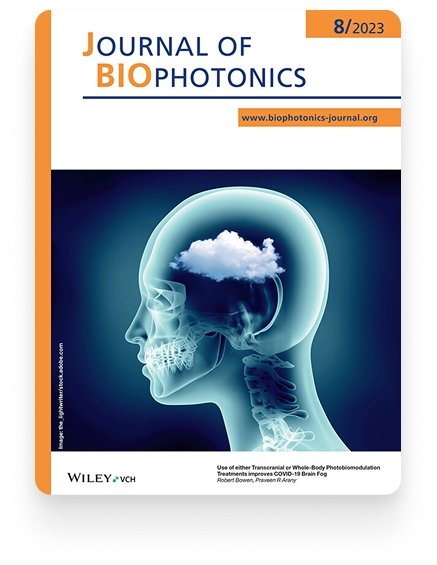
In a study by Bowen and Arany (2023), 12 sessions of 14 minutes each using the Neuradiant 1070 resulted in improvements in cognitive tests including working memory, executive function, mental flexibility, and reaction time. These findings were similar to findings using a full-body PBM bed, suggesting that reduction in Long COVID symptoms can be generated with a more affordable and portable tPBM device.
Methods
Participants & Duration:
Two groups of seven individuals with Long COVID symptoms, including brain fog, underwent a four-week treatment consisting of 12 sessions per participant.
Interventions
Transcranial PBM (tPBM): 1070 nm LED helmet (Neuradiant 1070). Whole-Body PBM (wbPBM): NovoTHOR light bed emitting 660 nm and 850 nm wavelengths.
Assessments (pre- and post-12 sessions):
- Montreal Cognitive Assessment (MoCA)
- Digit Symbol Substitution Test (DSST)
- Trail Making Tests A & B
- Physical Reaction Time (PRT)
- Quantitative EEG (WAVi system)
Results
Cognitive Improvements:
Both PBM modalities were associated with statistically significant improvements on cognitive tests (p < 0.05).
EEG Changes:
Quantitative EEG (WAVi) measurements showed changes that supported the observed cognitive benefits.
Similar Efficacy for Both Methods:
Improvements were seen whether PBM was delivered transcranially or via whole-body light, suggesting various PBM delivery methods may benefit Long COVID brain fog.
Pre-Post PBM Usage Tests
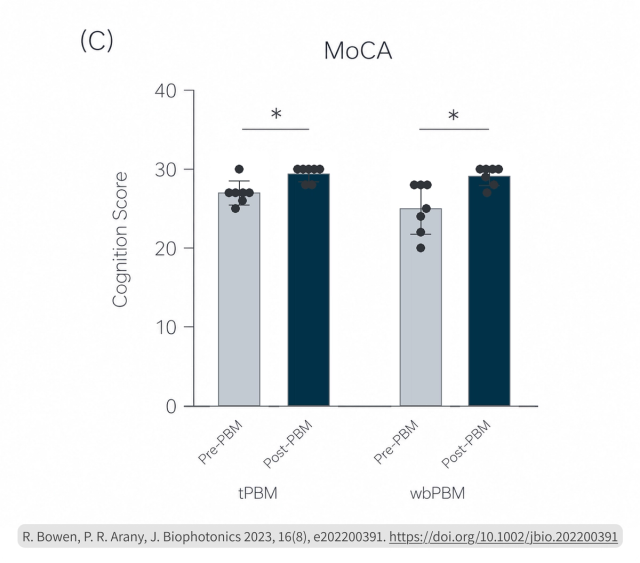
Graph C shows the pre and post light therapy protocols. In both groups we see an increase in the MoCA score, with a higher score meaning less impaired cognitive function.
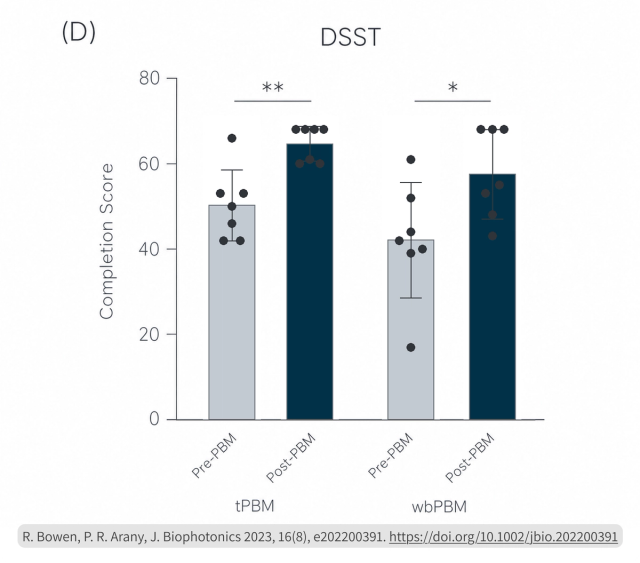
We can see in the digit symbol substitution test (DSST) there is also an improvement from the baseline test to after the light therapy was applied.
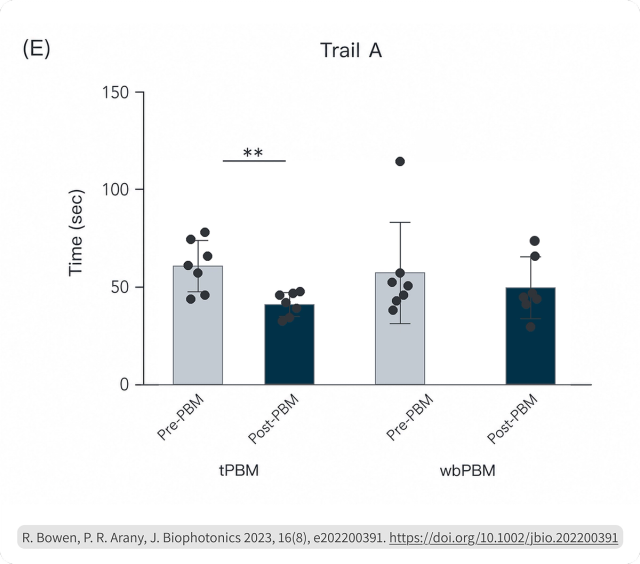
This graph shows a clear indication that after patients received tPBM in particular, there was a reduction in time it took to complete the task, showing clear cognitive processing improvements.
FAQs
What results can be expected and when?
Types of results and their timelines vary depending on the individuals. However, a combination of research and anecdotal evidence from providers suggests some expected results to be the following: improved language capabilities, improvements in emotional regulation, decreased repetitive behaviours, and improved social skills/engagement. While some clients may see results very quickly, others may take a few months.
What is mitochondrial dysfunction?
Mitochondrial dysfunction is a term that encapsulates dysfunction in various operations of the mitochondria. With mitochondria being the main energy producers of the cell, dysfunction can lead to reduced ATP (energy) production, increased oxidative stress, and difficulty maintaining healthy cell function. When mitochondria can’t keep up with the body’s energy demands or fail to remove damaged components, it can affect brain function, muscle strength, immune response, and overall vitality. Mitochondrial dysfunction is linked to many conditions, including fatigue, neurodegeneration, and metabolic disorders (Zong et al., 2024).
How many PBM sessions will I need?
Benefits can often be noticed within a few sessions, especially related to sleep and mental clarity. For cognitive improvements, consistent use over several weeks or months is typically recommended. As AD is often referred to as a neurodegenerative disease with genetic components, incorporating light therapy as a regular lifestyle habit can support overall brain health and give your brain the best chance to stay at its most performing level over time.
Is PBM safe?
Yes. PBM is FDA-cleared for various applications and has a strong safety profile. It’s non-invasive, painless, and has no known serious side effects when used as directed.
Learn More About PBM & Brain Health
 Blog
BlogMitochondrial Dysfunction: Causes, Symptoms, and How Light Can Help Restore Energy
Explore how PBM addresses mitochondrial dysfunction — restoring cellular energy, reducing oxidative stress, and supporting brain health

 Newsletters
The Most Overlooked Tool in Brain Injury Recovery and Biohacking
Discover why light therapy is becoming a key tool in brain injury recovery and biohacking—supporting energy, focus, and long-term resilience.

 Blog
BlogHow Brain Vital Signs and Photobiomodulation Are Shaping the Future of Brain Health
tPBM can rapidly improve cognitive processing, with cases showing up to 70 ms gains in healthy users, dramatic recovery post-concussion, and long-term benefits in mild impairment. Even advanced dementia patients show measurable brain activation changes.

References
Bowen, R., & Arany, P. R. (2023). Use of either transcranial or whole-body photobiomodulation treatments improves COVID-19 brain fog. Journal of Biophotonics, 16(8), e202200391. https://doi.org/10.1002/jbio.202200391
Dougal, G., Ennaceur, A., & Chazot, P. L. (2021). Effect of transcranial near-infrared light 1068 nm upon memory performance in aging healthy individuals: A pilot study. Photobiomodulation, Photomedicine, and Laser Surgery, 39(10), 654–660. https://doi.org/10.1089/photob.2020.4956
Hamblin, M. R. (2017). Mechanisms and applications of the anti-inflammatory effects of photobiomodulation. AIMS Biophysics, 4(3), 337–361. https://doi.org/10.3934/biophy.2017.3.337
Greene, C., Connolly, R., Brennan, D., Laffan, A., O'Keeffe, E., Zaporojan, L., O'Callaghan, J., Thomson, B., Connolly, E., Argue, R., Meaney, J. F. M., Martin-Loeches, I., Long, A., Ni Cheallaigh, C., Conlon, N., Doherty, C. P., & Campbell, M. (2024). Blood–brain barrier disruption and sustained systemic inflammation in individuals with long COVID-associated cognitive impairment. Nature Neuroscience, 27(3), 421–432. https://doi.org/10.1038/s41593-024-01576-9
Lai, Y.-J., Liu, S.-H., Manachevakul, S., Lee, T.-A., Kuo, C.-T., & Bello, D. (2023). Biomarkers in long COVID-19: A systematic review. Frontiers in Medicine, 10, Article 1085988. https://doi.org/10.3389/fmed.2023.1085988
Molnár, T., Lehóczki, A., Fekete, M., Várnai, R., Zavori, L., Erdő-Bonyár, Sz., Simon, D., Berki, T., Csecsei, P., & Ezer, E. (2024). Mitochondrial dysfunction in long COVID: Mechanisms, consequences, and potential therapeutic approaches. GeroScience, 46(5), 5267–5286. https://doi.org/10.1007/s11357-024-01165-5
Peluso, M. J., Sans, H. M., Forman, C. A., Nylander, A. N., Ho, H., Lu, S., Goldberg, S. A., Hoh, R., Tai, V., Munter, S. E., Chenna, A., Yee, B. C., Winslow, J. W., Petropoulos, C. J., Martin, J. N., Kelly, J. D., Durstenfeld, M. S., Hsue, P. Y., Hunt, P. W., Greene, M., Chow, F. C., Hellmuth, J., Henrich, T. J., Glidden, D. V., & Deeks, S. G. (2022). Plasma markers of neurologic injury and inflammation in people with self-reported neurologic postacute sequelae of SARS-CoV-2 infection. Neurology: Neuroimmunology & Neuroinflammation, 9(5), e200003. https://doi.org/10.1212/NXI.0000000000200003
Mayo Clinic Staff. (2024, August 23). Long COVID: Lasting effects of COVID-19. Mayo Clinic. https://www.mayoclinic.org/diseases-conditions/coronavirus/in-depth/coronavirus-long-term-effects/art-20490351